


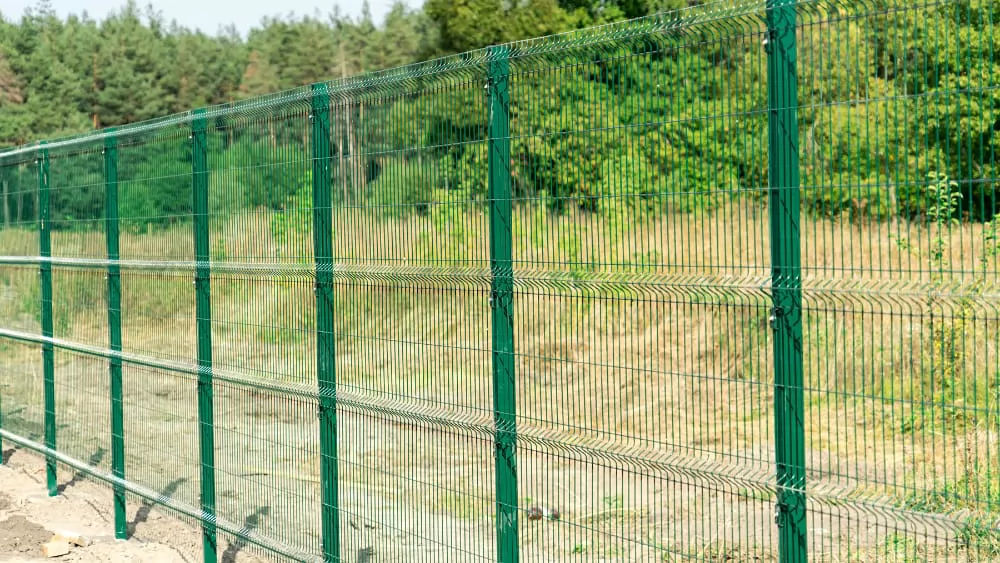
Coated welded wire mesh is a versatile and widely used material across construction, agriculture, industry, and infrastructure projects. As a surface-treated form of welded wire mesh, it achieves enhanced corrosion resistance, improved durability, and better visual appeal through different coating methods. Understanding the different types of coated welded wire mesh helps engineers, contractors, and buyers select the most suitable solution for their specific application needs.
Coated welded mesh is a type of mesh product based on welded mesh, where the surface of the metal wires is covered with a layer of functional material (such as plastic or zinc). During the coating process, the type, thickness, and adhesion of the coating material determine its corrosion resistance, aesthetics, and service life. Coated welded mesh maintains the basic form of welded mesh and, thanks to its coating properties, can better integrate into or withstand various environments.
There are various types of coated welded mesh, such as PVC-coated welded mesh, hot-dip galvanized welded mesh, and epoxy-coated welded mesh. Furthermore, coated welded mesh is easy to install, highly corrosion-resistant, and offers high safety. This product is widely used in gardening, industry, agriculture, construction, transportation, and municipal engineering.
According to surface coating materials, welded wire mesh can be classified into the following types. For a broader overview of mesh categories, you may also refer to different types of welded mesh.
Process
Hot-dip galvanized welded wire mesh is manufactured by immersing the welded mesh or steel wires into molten zinc at high temperatures. During this process, a metallurgical reaction occurs between zinc and steel, forming a thick zinc-iron alloy layer that is firmly bonded to the surface. The galvanizing process can be applied either before welding or after welding, with post-weld galvanizing ensuring full protection at weld joints.
Features
This type of welded wire mesh offers excellent corrosion resistance and long service life. The zinc coating is thick, durable, and highly resistant to moisture, rain, and atmospheric corrosion, making it suitable for harsh outdoor environments.
Applications
It is widely used in construction reinforcement, highway and railway fencing, bridge protection, industrial safety barriers, agricultural fencing, and infrastructure projects exposed to outdoor or coastal conditions.
Process
Electro-galvanized welded wire mesh is produced by depositing a thin layer of zinc onto the steel wire surface through an electroplating process. An electric current causes zinc ions to bond evenly to the wire, resulting in a smooth and uniform coating that is typically applied after welding.
Features
The zinc layer is thinner than hot-dip galvanizing, providing a bright and clean appearance with moderate corrosion resistance. The mesh is easy to fabricate, cut, and install, and is suitable for light-duty applications.
Applications
Common applications include indoor partitions, shelving systems, storage cages, light fencing, animal cages, and decorative or cost-sensitive projects.
Process
PVC coated welded wire mesh is manufactured by applying a polyvinyl chloride coating over galvanized or plain welded wire mesh using extrusion or dipping methods. The PVC layer fully encapsulates the steel wire, forming a continuous protective barrier.
Features
This mesh provides enhanced corrosion resistance, weather resistance, and chemical stability. It also offers improved flexibility, impact resistance, and a smooth surface, with multiple color options available for aesthetic purposes.
Applications
It is commonly used for garden fencing, residential and commercial perimeter fencing, animal enclosures, landscaping, playground protection, and decorative outdoor applications.
Process
Epoxy coated welded wire mesh is produced by spraying or dipping epoxy resin onto the welded wire surface, followed by controlled curing. This process creates a dense, chemically bonded protective film on the steel.
Features
The epoxy coating provides excellent resistance to corrosion, abrasion, moisture, and chemical exposure. It also enhances durability in aggressive environments and reduces the risk of coating damage during handling and installation.
Applications
Typical applications include industrial facilities, wastewater treatment plants, marine and coastal structures, chemical plants, and reinforced concrete projects requiring extended durability.
Process
Powder coated welded wire mesh is manufactured by electrostatically applying dry powder to the welded wire surface and curing it under high temperature. The powder melts and forms a uniform, durable, and tightly bonded coating.
Features
This coating provides a thick, smooth, and visually appealing finish with good corrosion resistance, wear resistance, and impact resistance. A wide range of colors and finishes can be achieved.
Applications
It is widely used in architectural fencing, security fencing, balconies, railings, sports facilities, commercial buildings, and projects where both aesthetics and durability are important.
Choosing the right coated welded wire mesh depends on usage environment, functional needs, and budget. If you are also comparing material options such as stainless steel grades, this comparison of 304 vs 316 stainless steel welded mesh provides valuable insights.
| Consideration Factor | Recommended Type | Reason |
|---|---|---|
| Usage Environment | ||
| Outdoor, humid, rainy, or chemical exposure environments | Hot-Dip Galvanized, PVC/PE Coated, Stainless Steel | Corrosion resistance is the primary requirement. Hot-dip galvanizing provides long-term protection, PVC/PE coating offers full coverage with added weather resistance and color options, while stainless steel is suitable for demanding and corrosive environments. |
| High-salinity environments (e.g., coastal areas) | 316 Stainless Steel, Hot-Dip Galvanized + PVC Coating | Extremely high corrosion resistance is required. 316 stainless steel contains molybdenum, which significantly improves resistance to chloride ion corrosion common in coastal areas. |
| Indoor or dry environments | Electro-Galvanized, Low-Carbon Steel Mesh, Powder-Coated Mesh | Corrosion risk is low, so basic surface protection is sufficient. These options provide good functionality at a lower cost. |
| Functional Requirements | ||
| Need to match colors with surrounding environment | PVC/PE Dip-Coated Mesh, Powder-Coated Mesh | These coatings offer a wide range of color options and good visual appeal, making them suitable for decorative and architectural applications. |
| Need to reduce injury risk to animals or people | PVC/PE Coated Mesh | The coating creates a smooth, rounded surface that minimizes sharp edges and improves safety for human and animal contact. |
| Concrete reinforcement with rust prevention requirements | Epoxy-Coated Mesh, Hot-Dip Galvanized Mesh | These options provide strong adhesion to concrete and effective corrosion resistance, helping extend the service life of reinforced structures. |
| High strength and load-bearing requirements | Low-Carbon Steel Mesh (Thicker Wire), Stainless Steel Mesh | Strength mainly depends on wire diameter and base material. Thicker low-carbon steel or stainless steel provides higher mechanical strength. |
| Economic Budget | ||
| Cost-sensitive projects with low protection requirements | Electro-Galvanized Mesh, Ordinary Low-Carbon Steel Mesh | These options offer the lowest initial investment and are suitable for short-term or low-demand applications. |
| Balanced cost and long-term performance | Hot-Dip Galvanized Mesh, PVC Coated Mesh | These are mainstream choices that balance cost, durability, and long service life for most projects. |
| Sufficient budget with highest quality requirements | Stainless Steel Mesh, High-End Custom Coated Mesh | Designed for the most demanding environments, offering superior performance and the longest service life. |
In conclusion, each type of coated welded wire mesh offers distinct advantages depending on coating material, environment, performance requirements, and cost considerations. Whether prioritizing corrosion resistance, appearance, safety, or economy, selecting the appropriate coating ensures long-term performance and value. For further purchasing guidance, you may also explore where to buy welded wire mesh based on your project needs.
Everything you need to know about pig cage mesh: from galvanized and stainless steel to high-strength 6-gauge wire. Get expert buying tips and advice!
TWhen it comes to wire mesh manufacturers USA, the options are nearly endless. US manufacturers excel at producing a diverse range of wire me
When it comes to selecting stainless steel welded mesh for your project, understanding the difference between 304 and 316 grades is essential.