


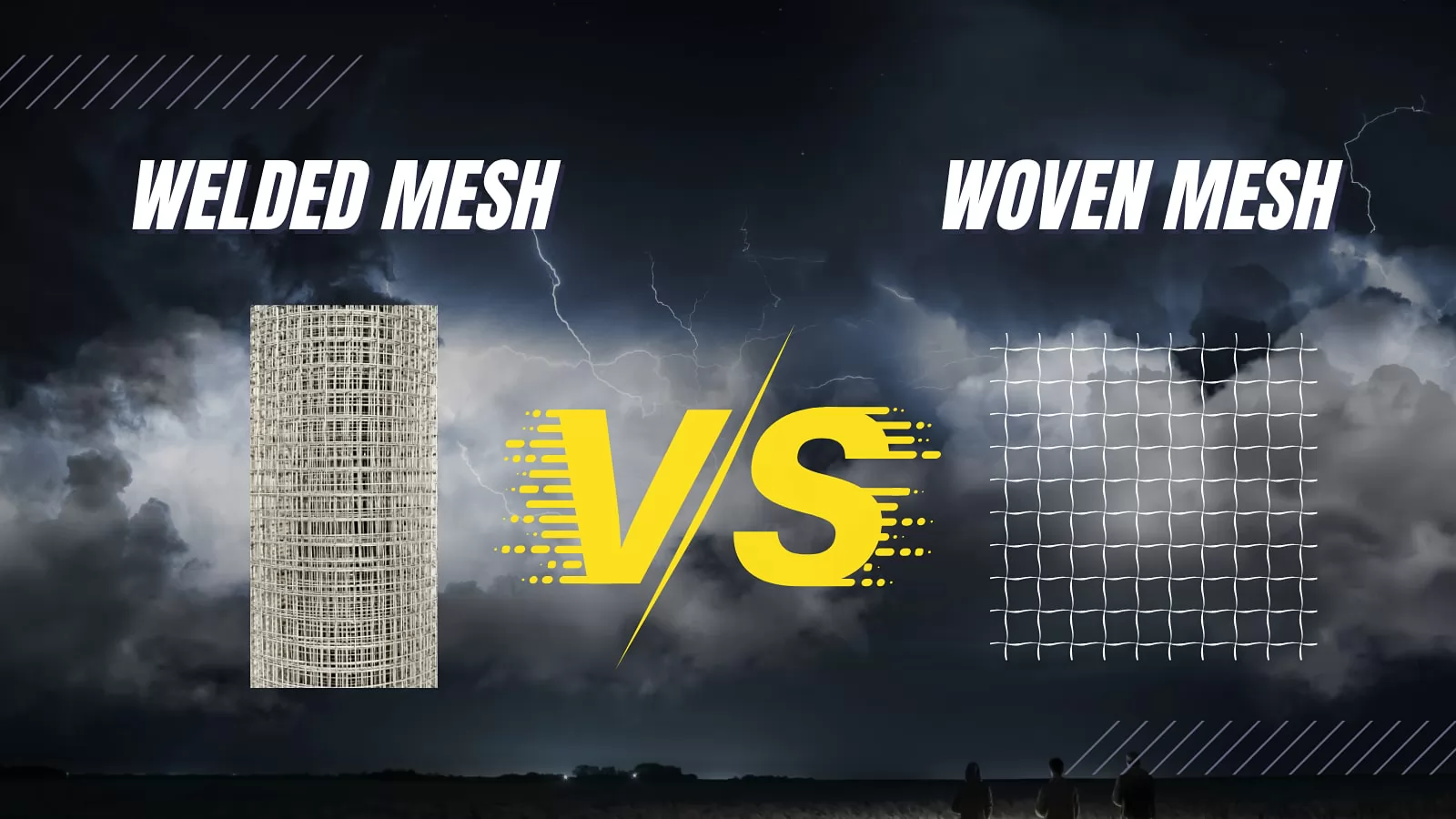
If you're trying to choose between Welded Wire Mesh and Woven Wire Mesh, you're probably not looking for a long technical explanation—you just want to know one thing:
Which one should I actually use?
The problem is, most articles explain how they are made, but not how to choose. That’s why many buyers end up picking the wrong type—leading to issues like deformation, poor filtration, or unnecessary costs.
This guide is different. Instead of going deep into theory, we’ll help you make a clear decision based on your actual use case.
Before comparing everything, start with this:
In most cases, you can decide between welded and woven wire mesh just by answering the following three questions.
Quick answer:
Structure use → Welded
Precision use → Woven
| Feature | Welded Wire Mesh | Woven Wire Mesh | Decision Tip |
|---|---|---|---|
| Structure | Rigid, holds shape well | Flexible, can bend | Need strong/fixed → Welded |
| Strength | High (good for heavy load) | Medium (not for structural support) | Heavy load → Welded |
| Precision / Aperture | Moderate | High (uniform openings) | Need precise filtering → Woven |
| Flexibility / Workability | Low (hard to bend) | High (easy to cut/bend) | Need shaping → Woven |
| Common Applications | Fences, concrete reinforcement, cages, industrial barriers | Filters, sieves, lab screens, precision separation | Match application → pick type |
| Cost | Lower for large panels | Higher per unit area for fine mesh | Budget sensitive → Welded |
| Durability / Lifespan | High for structural use | High for precise or chemical environments | Depends on use → see above |
Summary Tip: Need rigid structure → Welded, Need precise filtering → Woven
One of the most common questions from homeowners, farmers, and contractors is whether a welded wire fence or a woven wire fence is the better choice. The answer depends on what you're trying to contain, protect, or secure.
Although both fences are made from steel wire, they are designed differently and perform differently in real-world applications. Welded wire fences use welded intersections to create a rigid panel, while woven wire fences are formed by interlocking horizontal and vertical wires, allowing the fence to flex under pressure without breaking.
| Comparison | Welded Wire Fence | Woven Wire Fence |
|---|---|---|
| Structure | Welded at every intersection for a rigid panel | Wires are woven together for greater flexibility |
| Best For | Residential fencing, security fencing, dog runs, garden enclosures | Farms, livestock fencing, large pastures, uneven terrain |
| Flexibility | Low, keeps its original shape | High, adapts well to slopes and rough ground |
| Strength | Excellent impact resistance for rigid installations | Absorbs animal impact by flexing instead of breaking |
| Appearance | Clean, straight, and modern | Traditional agricultural appearance |
| Installation | Faster on level ground using fence panels or rolls | Requires proper tensioning but works better on uneven land |
| Typical Lifespan | 15–30 years with galvanized or PVC coating | 20–40 years with high-quality galvanized wire |
Quick Tip: Choose a welded wire fence if you need a rigid, attractive fence for homes, gardens, pets, or security. Choose a woven wire fence if you're fencing livestock, covering long distances, or installing fencing on uneven ground.
Choosing the right fence for dogs is about more than simply keeping them inside your yard. The fence should be strong enough to withstand jumping or scratching, have openings small enough to prevent escape, and remain durable in all weather conditions.
When comparing welded wire vs woven wire for dog fence, welded wire is the preferred option for most residential dog owners. Its rigid construction creates a stable barrier that maintains its shape over time, while the uniform mesh openings reduce the risk of puppies or small breeds squeezing through.
Woven wire fencing can also be used for dogs, especially on farms or large rural properties. Because the fence is flexible, it performs well on uneven terrain, but larger mesh openings may require additional protection, such as a smaller mesh size or an added electric wire, depending on the breed and size of the dog.
| Feature | Welded Wire Fence | Woven Wire Fence |
|---|---|---|
| Best Environment | Residential yards, dog runs, kennels | Farms, ranches, large outdoor areas |
| Prevents Escape | Excellent with small, consistent openings | Good when using appropriate mesh size |
| Resistance to Chewing & Scratching | High due to rigid welded structure | Moderate, depends on wire gauge |
| Performance on Slopes | Better on level ground | Excellent on uneven terrain |
| Installation | Faster with fence panels or rolls | Requires tensioning during installation |
| Recommended For | Most pet owners and suburban homes | Large rural properties with working dogs |
Recommendation: For most homes, a galvanized or PVC-coated welded wire fence with small openings provides the best combination of safety, durability, and appearance. Woven wire fencing becomes a better choice when fencing large properties or installing on rolling terrain where flexibility is more important than rigidity.
Selecting the wrong type of wire fence can lead to higher maintenance costs, reduced service life, or even fence failure. Before making a purchase, avoid these common mistakes that many first-time buyers make.
The lowest-priced fence is not always the most economical. A fence that doesn't suit the application may require repairs or replacement much sooner. Always consider installation costs, expected lifespan, and maintenance requirements rather than comparing material prices alone.
Welded wire fencing performs best on relatively flat ground, while woven wire fencing naturally follows hills and uneven landscapes. Installing rigid welded panels on steep slopes often creates gaps beneath the fence that animals can crawl through.
Many buyers focus on the fence type but overlook mesh size. Larger openings may allow small pets or young animals to escape, while unnecessarily small openings can increase material costs without providing additional benefits. Always choose the mesh size according to the animals being contained.
Wire diameter and protective coating have a significant impact on durability. Heavier wire gauges generally provide greater strength, while galvanized or PVC-coated finishes improve corrosion resistance and extend the fence's service life, especially in outdoor environments.
Welded wire fences are commonly selected for residential security, gardens, dog enclosures, and industrial partitions because they provide a rigid, attractive appearance. Woven wire fences are better suited to livestock fencing, agricultural land, and large properties where flexibility is essential.
| Mistake | Better Choice |
|---|---|
| Choosing only by price | Compare total lifetime cost instead |
| Installing welded fence on steep slopes | Consider woven wire fencing |
| Selecting oversized mesh openings | Match mesh size to the animal |
| Ignoring wire gauge and coating | Choose appropriate strength and corrosion protection |
| Using the same fence for every project | Select fencing based on application and environment |
Buying Tip: The best fence is not simply the strongest or the least expensive. It is the one that matches your application, terrain, animal type, and long-term maintenance expectations. Taking a few minutes to evaluate these factors before purchasing can save significant time and money in the future.
A welded wire fence is usually the better option when appearance, rigidity, and easy installation are your priorities. Because every wire intersection is welded, the fence stays flat and maintains its shape over time, making it ideal for residential and commercial properties.
Welded wire fencing also creates smaller, more consistent openings, making it difficult for small animals to squeeze through while providing a clean, professional appearance.
Woven wire fencing is designed primarily for agricultural applications. Unlike welded panels, the woven construction allows the fence to flex when livestock lean against it or when installed across rolling terrain. This flexibility helps reduce broken wires and extends the fence's service life.
For farms and ranches, woven wire fences generally provide better long-term performance because they can absorb repeated pressure from animals without permanently deforming.
There is no universal winner when comparing a welded wire fence vs woven wire fence. Each serves a different purpose.
If your goal is a neat-looking, rigid fence for residential, commercial, or security applications, a welded wire fence is usually the better investment. If you need to contain livestock over large areas or install fencing on uneven ground, a woven wire fence is often the more practical and durable solution.
Ultimately, the best fence is the one that matches your application, terrain, and maintenance expectations rather than simply choosing the strongest or least expensive option.
| Application | Recommended Mesh | Reason |
|---|---|---|
| Fencing / Security Panels | Welded Wire Mesh | Rigid structure, resists bending and impact |
| Concrete Reinforcement | Welded Wire Mesh | High strength, holds shape under load |
| Industrial Barriers / Cages | Welded Wire Mesh | Durable and stable, easy to install in large panels |
| Filtering Liquids or Gases | Woven Wire Mesh | Precise openings, consistent filtration |
| Sieving or Screening Particles | Woven Wire Mesh | Uniform aperture, prevents clogging or uneven separation |
| Laboratory / Precision Equipment | Woven Wire Mesh | High accuracy and flexibility for custom shapes |
| High Temperature or Chemical Exposure | Woven Wire Mesh (stainless steel recommended) | Flexible, corrosion-resistant, stable under stress |
Tip: Match your actual application to the mesh type for best performance and cost-efficiency.
When it comes to selecting the right type of wire mesh, many buyers ask the same question: should I choose welded wire mesh or woven wire mesh?
Although they may appear similar at first glance, they’re structurally and functionally quite different. Are you building a reinforced structure? Or filtering fine powders? Your answer can change everything.
To help you make a smarter choice, we’ve compared these two mesh types across five major aspects:
| Category | Welded Wire Mesh | Woven Wire Mesh |
|---|---|---|
| 1. Structure | Intersections are permanently welded, creating rigid grid | Wires are woven over and under without welding |
| 2. Strength & Rigidity | High rigidity and load-bearing capacity | Flexible and bendable but lower impact resistance |
| 3. Typical Uses | Construction, fencing, barriers, animal cages | Filtration, sieving, EMI shielding, ventilation |
| 4. Workability & Installation | Rigid, best for flat or framed installs | Easy to cut, roll, and wrap on curved surfaces |
| 5. Material & Mesh Range | Thicker wire (2mm+), limited mesh count | Wide range of alloys, fine wire (down to 0.03mm), up to 400 mesh |
Welded mesh is manufactured by welding each wire intersection, forming a fixed grid that maintains its shape. Think of it like a steel skeleton—strong, rigid, and durable.
In contrast, woven mesh is made by weaving wires over and under each other, much like fabric. It’s flexible and adaptable, with no welding involved.
For example: If you bend a welded mesh sheet, it bounces back. A woven mesh, once bent, will hold the shape. This structural difference greatly affects how you use them.
If your application requires load-bearing performance, welded mesh is the clear winner. A 2m × 3m panel made with 3mm wire can support hundreds of kilograms without bending—ideal for reinforcing concrete or building barriers.
Woven mesh, on the other hand, is designed for precision work, not heavy loads. Its wires are usually thinner (from 0.03mm to 1mm), making it better suited for low-pressure applications like filtration or shielding.
Welded mesh is your go-to for construction reinforcement, perimeter fencing, machine guards, and livestock cages. Its rigidity and strength make it the preferred option for structural or protective installations.
Woven mesh excels in technical environments—liquid or gas filtration, powder sieving, EMI shielding in electronics, or HVAC duct protection. In industries like pharmaceuticals and food processing, it’s often used with fine mesh counts (e.g., 150 mesh = 150 holes per inch).
Example:
Welded wire mesh is rigid and not easily rolled, which makes it great for flat installations or when pre-cut and framed. It holds its shape well and doesn’t fray after cutting.
Woven mesh is much easier to handle for curved or irregular installations. It can be wrapped, rolled, or layered, but because there are no welds, it may unravel at the edges after cutting—so edge reinforcement is usually necessary.
Welded mesh typically uses thicker galvanized or stainless steel wires (2.0mm to 6.0mm), with common mesh sizes ranging from 25mm to 100mm. It's ideal for heavy-duty, outdoor applications.
Woven mesh offers far more variety—materials like stainless steel (304, 316), brass, copper, nickel, or titanium. Mesh counts range from 5 to over 400 (400 mesh = extremely fine, ~0.03mm opening), suitable for precision filtering and shielding.
Example:
A high-quality galvanized welded wire fence typically lasts 15 to 30 years, depending on the coating, wire gauge, climate, and maintenance. PVC-coated and stainless steel welded wire fences generally provide an even longer service life, especially in humid or coastal environments.
Woven wire fencing is highly flexible, but it also has some limitations. It usually requires proper tension during installation, may not provide the same rigid appearance as welded wire fencing, and larger mesh openings may not be suitable for small pets unless a smaller mesh size is selected.
Woven wire fencing is primarily used for agricultural and livestock applications, including cattle, sheep, goats, horses, and deer fencing. It is also suitable for large property boundaries and uneven terrain because the flexible construction follows changes in ground elevation.
Yes. Chain link fencing is technically a type of woven wire fence because the steel wires are interwoven rather than welded together. However, chain link uses a diamond-shaped weave, while traditional woven field fence uses horizontal and vertical woven wires designed primarily for agricultural fencing.
The best woven wire fence depends on the application. Fixed-knot and high-tensile woven wire fences are popular choices for livestock and wildlife control because they offer excellent strength, durability, and long service life. Selecting the proper mesh spacing and wire gauge is equally important.
For most residential and commercial welded wire fences, fence posts are commonly spaced between 6 and 8 feet (1.8 to 2.4 meters) apart. Heavier fences or areas exposed to strong winds may require closer post spacing to improve stability.
In terms of rigidity and structural strength, welded wire fencing is generally stronger because every wire intersection is welded. Woven wire fencing, however, is better at absorbing impact through flexibility, making it a preferred option for livestock and uneven terrain.
For most residential dog owners, welded wire fencing is the better choice because it provides a rigid structure with consistent mesh openings that help prevent dogs from escaping. Woven wire fencing is more suitable for large rural properties or farms where flexibility and terrain adaptability are priorities.
Welded and woven wire mesh may share the same materials, but they serve very different purposes. Choosing the right type isn’t just about preference—it’s about performance, safety, and efficiency. Whether you're reinforcing a concrete slab, filtering a chemical solution, or protecting a worksite, selecting the right mesh will make all the difference.
Whether your next fencing project calls for welded or woven mesh, Yangze is here to assist. Backed by years of industry experience and a team of knowledgeable engineers, we guide you through the selection process to ensure you get the right fencing solution for your environment and budget.
We offer a complete range of wire fence products with various mesh sizes, wire gauges, and material options—including galvanized steel and stainless steel—serving industries such as agriculture, construction, industrial safety, and more.
Get in touch with us today to discuss your requirements, request samples, or receive a free consultation. Let Yangze be your trusted partner for every fencing solution.
To support informed decision-making, we have compiled a curated list of the 10 Best Wire Mesh Manufacturers & Suppliers in India for 2026.
Discover the top 8 wire mesh manufacturers and suppliers in Malaysia. Compare welded wire mesh, PVC mesh, and stainless steel mesh suppliers to make informed sourcing decisions.
Explore the top 5 trusted metal mesh suppliers in Indonesia, providing durable and reliable products for construction and industrial needs.
